How Sleep Deprivation Affects Decision-Making in Leadership Roles

In leadership roles, decision-making often involves complex trade-offs, long-term consequences, and high levels of uncertainty. Executives are regularly required to assess risks, weigh competing priorities, and regulate their own emotional responses under pressure. While experience and expertise are commonly regarded as key assets in these situations, an accumulating body of research suggests that cognitive and emotional capacities are also strongly influenced by basic physiological states. Among these, sleep plays a particularly significant role. Even mild sleep loss, which may not be perceived as impairing, can subtly alter how leaders process information and respond to challenges.
Sleep deprivation does not simply produce feelings of tiredness. It affects specific neural and cognitive systems that are directly involved in judgment, self-control, and social behavior. For leaders, these systems are constantly engaged. The ability to remain calm during a crisis, to accurately evaluate a proposal, or to resist impulsive reactions depends on brain functions that are sensitive to sleep duration and quality. Understanding these effects is not about diagnosing individuals but about recognizing how routine variations in sleep can shape the decision-making environment in organizations.
This article explores the relationship between sleep deprivation and decision-making in leadership contexts. It examines how sleep loss influences risk assessment, emotional regulation, and strategic thinking, and it discusses why these effects can go unnoticed. The aim is to provide a neutral overview of the research and to outline practical considerations for those interested in organizational performance and leadership effectiveness.
The Cognitive Foundations of Leadership Decisions
Decision-making in leadership roles relies on a set of interconnected cognitive processes, often referred to as executive functions. These include working memory, cognitive flexibility, and inhibitory control. Working memory allows a leader to hold and manipulate multiple pieces of information simultaneously, such as financial projections, team dynamics, and market conditions. Cognitive flexibility supports shifting between different perspectives or strategies when circumstances change. Inhibitory control helps suppress impulsive responses and resist distractions. All of these functions are supported by the prefrontal cortex, a brain region that is particularly sensitive to sleep loss.
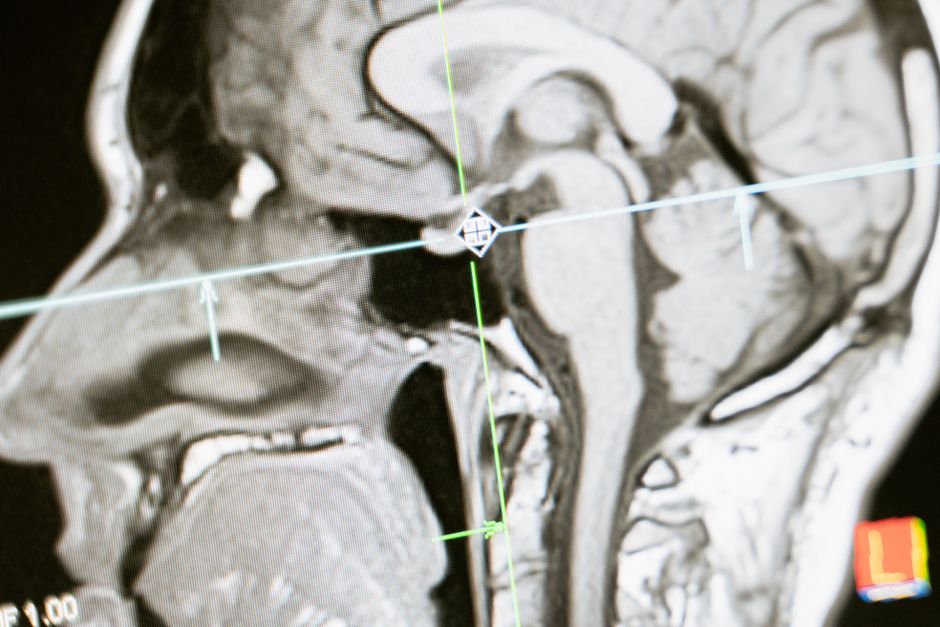
When sleep is restricted, even by a few hours per night, performance on tasks requiring these executive functions tends to decline. Studies using neuroimaging have shown reduced activity in prefrontal areas during demanding cognitive tasks after sleep deprivation. At the same time, activity in more primitive brain regions, such as the amygdala, may increase. This shift in neural activity can lead to decisions that are more reactive and less deliberative. For leaders, whose decisions often require careful analysis and the integration of diverse information, such changes can have significant implications.
It is important to note that the effects of sleep loss are not always obvious to the individual experiencing them. People often underestimate how impaired they are. This is partly because sleep deprivation can produce a temporary feeling of alertness, especially during the early stages of a day, followed by periods of reduced performance. The mismatch between subjective perception and objective performance means that leaders may believe they are functioning well when, in fact, their cognitive resources are depleted. This can lead to overconfidence in judgments and a reduced ability to recognize errors.
Risk Assessment Under Sleep Deprivation
Risk assessment is a core component of strategic leadership. It involves evaluating potential gains and losses, estimating probabilities, and considering both short-term and long-term consequences. Sleep deprivation has been shown to alter risk preferences in systematic ways. In laboratory experiments, sleep-deprived participants tend to make more risky choices in tasks that involve uncertain outcomes, particularly when potential rewards are emphasized. They may also show reduced sensitivity to negative feedback, meaning they are less likely to adjust their behavior after a poor decision.
One explanation for these findings is that sleep loss impairs the ability to accurately evaluate probabilities and to weigh costs against benefits. The prefrontal cortex, which supports rational analysis, becomes less effective, while emotional and reward-related brain regions may become more influential. As a result, decisions may be driven more by immediate incentives or emotional reactions than by careful calculation. In a leadership context, this could manifest as an increased willingness to pursue high-risk initiatives without sufficient due diligence, or as a tendency to dismiss warning signs that would normally prompt caution.
Furthermore, sleep deprivation can affect the processing of feedback and the ability to learn from past outcomes. Leaders who are sleep-deprived may be less able to incorporate new information into their mental models, leading to repeated mistakes or an inability to adapt strategies when conditions change. This is particularly relevant in dynamic environments where rapid learning and adjustment are essential. The cumulative effect of these changes can be a pattern of decision-making that is less consistent, less informed, and more vulnerable to biases.
Emotional Regulation and Interpersonal Dynamics
Emotional regulation is another critical aspect of leadership. Leaders are frequently required to manage their own emotions, remain composed under stress, and respond appropriately to the emotions of others. Sleep deprivation is known to amplify emotional reactivity. Research has shown that after sleep loss, individuals exhibit stronger emotional responses to negative stimuli and may have difficulty disengaging from emotional content. The amygdala, which plays a central role in emotional processing, becomes hyperactive, while its connectivity with the prefrontal cortex is reduced.
For leaders, this can translate into irritability, impatience, and a reduced tolerance for frustration. Such changes can affect team dynamics, negotiation outcomes, and the overall climate of an organization. A leader who is sleep-deprived may react more defensively to criticism, escalate conflicts, or fail to recognize the emotional cues of colleagues. These interpersonal effects can ripple through an organization, influencing morale and collaboration. In high-stakes situations, the ability to stay calm and think clearly is often what distinguishes effective leadership from poor leadership. Sleep deprivation undermines that ability.
Moreover, sleep loss can impair empathy and social judgment. Studies suggest that sleep-deprived individuals are less accurate in recognizing facial expressions of emotion and may have difficulty taking the perspective of others. This can lead to misunderstandings and misattributions in professional relationships. Leaders who are sleep-deprived may inadvertently create an environment where team members feel unheard or undervalued, which can have long-term consequences for trust and engagement.
Strategic Thinking and Long-Term Planning
Strategic thinking requires the ability to think beyond immediate concerns, to envision future scenarios, and to plan accordingly. This type of thinking draws heavily on working memory, cognitive flexibility, and the capacity to resist short-term temptations in favor of long-term goals. Sleep deprivation has been shown to impair these very capacities. For example, sleep-deprived individuals tend to perform worse on tasks that require planning and problem-solving, and they may default to simpler, less effective strategies.
In leadership roles, strategic decisions often involve a trade-off between immediate pressures and long-term objectives. A sleep-deprived leader may inadvertently prioritize short-term gains or quick fixes over sustainable solutions. They may also struggle to maintain a clear vision, becoming more reactive to daily events rather than proactive in shaping the future. The ability to foresee consequences and to consider multiple scenarios is compromised, which can lead to strategies that are less robust and more vulnerable to unexpected challenges.
Additionally, sleep loss can affect creativity and innovative thinking, which are important for adapting to changing markets and for identifying new opportunities. The cognitive flexibility needed to combine ideas in novel ways is reduced, making it harder to generate creative solutions. For organizations that rely on innovation, the sleep health of their leaders may be an underappreciated factor in their capacity to compete and evolve.
Organizational Implications and Considerations
The effects of sleep deprivation on leadership decision-making have implications for organizational practices and culture. In many professional environments, sleep loss is normalized or even glorified as a sign of dedication. However, the research suggests that such attitudes may be counterproductive. When leaders are chronically sleep-deprived, their decision-making abilities may be compromised in ways that are not immediately visible but can accumulate over time. This can affect everything from daily operational choices to major strategic moves.
Organizations may benefit from considering sleep as a factor in performance and well-being. This does not necessarily mean implementing strict policies, but rather fostering an awareness of how sleep affects cognitive and emotional functioning. For instance, scheduling important decisions at times when leaders are likely to be more rested, or encouraging breaks that allow for recovery, could be part of a broader approach. It is also important to recognize that sleep needs vary among individuals, and there is no single prescription that works for everyone.
Companies like RestWise Analytics focus on providing data and insights related to sleep and performance, which can help organizations make informed decisions about work schedules and health initiatives. However, any approach should be tailored to the specific context and should not replace professional judgment. The relationship between sleep and decision-making is complex, and many factors beyond sleep can influence leadership effectiveness. A balanced perspective that considers sleep as one of several influential variables is likely to be most useful.
In conclusion, sleep deprivation can affect leadership decision-making through its impact on risk assessment, emotional regulation, and strategic thinking. These effects are often subtle and may not be recognized by the individuals experiencing them. By understanding the research, leaders and organizations can take steps to mitigate potential risks and support better decision-making environments. Ultimately, the goal is not to prescribe specific behaviors but to encourage a thoughtful consideration of how basic physiological needs interact with complex professional demands.