Creating a Sleep-Friendly Workplace: Policies That Boost Team Productivity
In modern work environments, employee fatigue is increasingly recognized as a factor that can influence performance, safety, and overall well-being. Many organizations are now examining how sleep health intersects with productivity, and some are turning to structured policies to address these concerns. RestWise Analytics, a firm specializing in workplace sleep data, has observed that companies adopting sleep-friendly practices often report changes in team dynamics and output. However, these outcomes depend on multiple variables, including organizational culture, job roles, and individual sleep needs.
Sleep-friendly workplace policies encompass a range of adjustments, from flexible scheduling to designated rest areas. The underlying principle is to align work demands with human circadian rhythms and sleep requirements. While research suggests potential benefits such as reduced fatigue and improved cognitive function, it is important to approach these policies as part of a broader wellness strategy rather than a standalone solution. This article explores key policy areas, implementation considerations, and the conditional nature of results.
By understanding the evidence and contextual factors, employers can make informed decisions about whether and how to integrate sleep-friendly measures. The goal is not to prescribe a one-size-fits-all approach but to present a framework that can be adapted to diverse workplace settings.
Understanding the Impact of Fatigue on Productivity
Fatigue resulting from insufficient or poor-quality sleep can affect various aspects of work performance, including attention, decision-making, and interpersonal communication. Studies in occupational health have linked chronic fatigue to increased error rates, slower reaction times, and reduced creativity. In the United States, where long work hours and shift work are common in certain industries, these effects may be more pronounced. However, the relationship between sleep and productivity is not linear; individual differences, task types, and environmental factors all play a role.
Organizations may benefit from assessing fatigue levels through anonymous surveys or wearable data, as RestWise Analytics provides. Such assessments can help identify patterns and inform policy design. It is important to note that while fatigue management can contribute to a healthier workforce, it does not guarantee immediate productivity gains. Instead, it may create conditions that support sustained performance over time.
Flexible Start Times and Shift Scheduling
One of the most widely discussed sleep-friendly policies is flexible start times, which allow employees to begin work within a range of hours rather than at a fixed time. This approach acknowledges that chronotypes—natural sleep-wake preferences—vary among individuals. For early risers, a traditional 8 a.m. start may be ideal, while night owls may function better with a later start. By accommodating these differences, employers can potentially reduce the mismatch between work schedules and biological rhythms, a condition known as social jetlag.
Implementing flexible start times requires careful planning to ensure coverage and collaboration. Some companies use core hours (e.g., 10 a.m. to 3 p.m.) when all team members are expected to be available, with flexible hours around them. Others adopt shift scheduling software that allows employees to bid for shifts based on preference and seniority. In shift-based industries, rotating schedules can be designed to move forward (day to evening to night) rather than backward, which may ease circadian disruption.
The evidence on flexible scheduling suggests potential improvements in sleep duration and quality, but results vary. Factors such as manager support, team cohesion, and the nature of the work influence outcomes. Therefore, organizations considering this policy should pilot it with clear metrics and gather feedback to assess its fit.
Designated Nap Rooms and Rest Breaks
Another emerging practice is the provision of designated nap rooms or quiet rest areas. Short naps, typically 20 to 30 minutes, have been shown to enhance alertness and performance in some settings. Unlike longer naps, which can lead to sleep inertia, brief naps may help employees recharge without significant grogginess. Companies like RestWise Analytics have studied nap room usage and found that when properly implemented, these spaces can be a valued resource.
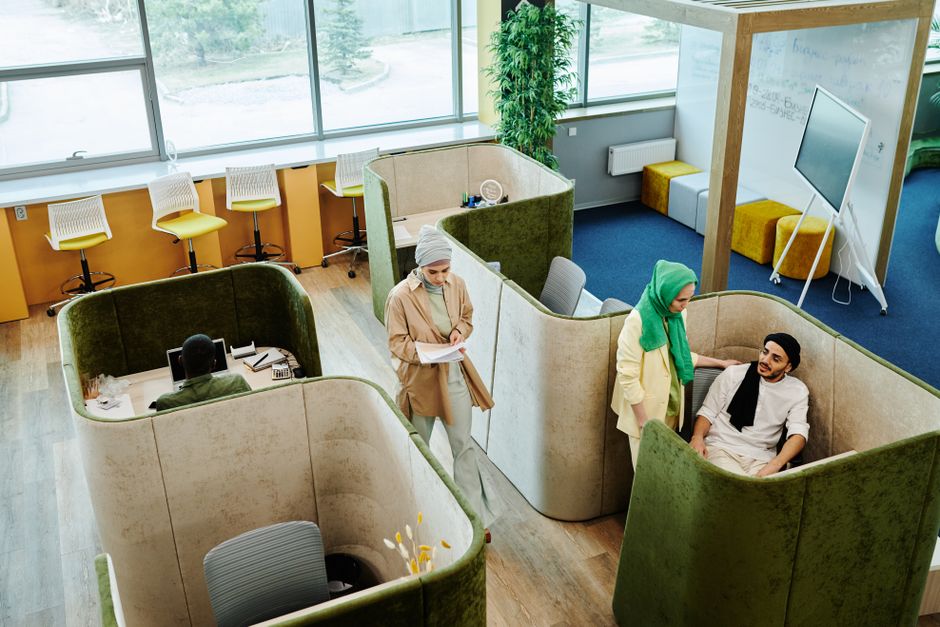
Design considerations for nap rooms include comfortable seating or cots, dim lighting, temperature control, and soundproofing. Policies should specify maximum nap duration, hygiene practices, and scheduling to avoid conflicts. Some organizations integrate nap breaks into the workday, while others allow employees to use nap rooms as needed. It is crucial to communicate that napping is not a sign of laziness but a strategic tool for fatigue management.
However, nap rooms are not universally applicable. In customer-facing or safety-sensitive roles, napping may not be feasible. Additionally, the effectiveness of nap rooms depends on organizational culture and individual sleep habits. Employers should evaluate whether this policy aligns with their operational needs and employee preferences.
Lighting, Temperature, and Environmental Adjustments
The physical work environment can significantly influence sleep-wake cycles and alertness. Exposure to bright light, especially blue-enriched light in the morning, can help regulate circadian rhythms. Conversely, excessive light in the evening may suppress melatonin production and delay sleep. Employers can adjust lighting systems to mimic natural daylight patterns, with brighter cool-toned light in the morning and warmer, dimmer light in the afternoon and evening.
Temperature also plays a role; a slightly cool environment (around 68–72°F) may promote alertness, while warm, stuffy rooms can induce drowsiness. Adjustable thermostats or personal fans can accommodate individual preferences. Additionally, reducing noise and providing spaces for quiet work can minimize distractions and support focus.
These environmental modifications are often low-cost and can be implemented incrementally. While they may not directly boost productivity, they can contribute to a more comfortable and sleep-friendly atmosphere. As with other policies, the impact is conditional on consistent application and employee engagement.
Education, Culture, and Leadership Support
Policies alone are insufficient without a supportive culture. Education programs that raise awareness about sleep health, fatigue signs, and available resources can empower employees to make informed choices. Workshops, informational materials, and access to sleep coaches or counselors are examples of such initiatives. Leadership buy-in is critical; when managers model healthy sleep behaviors and respect boundaries, employees are more likely to use sleep-friendly policies without stigma.
RestWise Analytics emphasizes that data-driven approaches can help tailor education and policies to specific workforce needs. For instance, if data shows high fatigue in a particular department, targeted interventions can be designed. However, organizations should avoid mandating sleep behaviors or overstepping into personal lives. Instead, they can provide options and encourage self-care.
Measuring the effectiveness of sleep-friendly policies requires a mix of quantitative and qualitative methods. Metrics such as absenteeism, error rates, and employee surveys can provide insights, but they should be interpreted with caution due to confounding factors. Ultimately, the goal is to create an environment where sleep health is respected as a component of overall well-being, with the understanding that productivity outcomes are influenced by many variables.